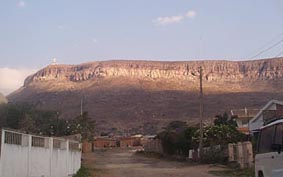
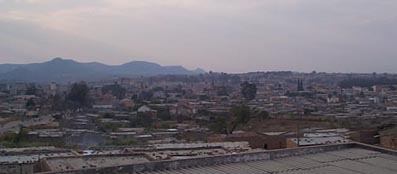
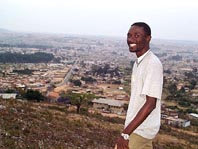
 Lubango is named after a cereal called 'oluvango', commonly traded here. The Portuguese built the city, established high schools and universities. Today about 800,000 people are crowded into this small city.
Education is highly valued in Lubango. Even though we have a university and schools, we lack primary school teachers. For the many who didn"t go to school they usually work in gardens and farms.
Food: Even though Lubango is a fertile farming area, the food produced is not enough, due to lack of techniques, machines, fertilizers, etc.
Government: Angola is learning to be a democratic country. Freedom of expression is still a new thing.
 Communication: Lubango has telephone, fax, radio and computer services, which are improving, although the prices are still very high.
Transportation: Some people have their own transportation. (eg. cars and bicycles) Many people walk, but alot of people make use of taxis.
Health care: There is quite a few clinics hospitals and pharmacies here, although not affordable for everyone.
Water comes from a mountain farm, about 10 km out of Lubango. The water needs to be purified before drinking.
Power goes off quite often. There are problems in the Hydro-electrics, blamed on lack of funds and spare parts. Lubango wasn't affected as badly by the war as other places in Angola. During colonization there was also slavery.
 The main diseases in Lubango are diarrhea and malaria. The malaria is not as high as in other places in Angola. People usually get treatment for it.
Most of the religious holidays are the same as in the West. There is a holiday called the Day of the Dead. People usually take flowers to the graves from the people they knew who died. This day is a Catholic tradition.
There are about four refugee camps as well.
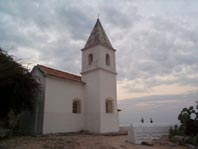
 There are over 50 denominations. The churches are usually full on Sundays. Alot of people have heard about God, but not about Jesus. Not everybody here has heard about the gospel.
Lubango is a beautiful, clean city with lots of potential. Come and see for yourself.
Staff Needs; Needs
DTS, Night DTS, Evangelism, Adult literacy, El Shaddai Children's Home, Base Development and Agriculture, Cultural and Etnolinguistics Studies, Community Centre, Primary Health Care, Youth Camps, Kings Kids, Unreached Peoples, Rescue and Restoration School, Ministry to local churches, Mercy Ministries, Testimonies. Needs, Staff Needs
About YWAM.
YWAM in Angola: Huambo, Kunene, Lobito, Lubango, Omunda Yevambo