|
|
|
 COMMUNITY DEVELOPMENT - PROJECTS COMMUNITY DEVELOPMENT - PROJECTS
GOAL DECLARATIONS FOR PERIOD 2006-2014
Fight against poverty in all it's forms by bringing the towns and villages to a real community development , in partnership with the churches, missions and other organisations working in the area of community development in Mali.
|
 |
 |
 |
|
DECLARATION OF VISION
Establish different Community Development projects on a regular basis over the next 10 years in Mali and else where; depending on the need.
We will develop the following areas:
- SPIRITUAL: Church Planting and other.
- SOCIAL: Establish associations to manage projects in Primary Health Care, Literacy and other.
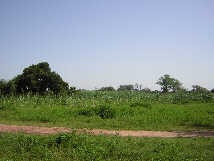
- PHYSICAL: Vegetable Gardens, Tree Planting, Animal Husbandry, Potable Water , and other.
|
|
|
DECLARATION OF MISSION
MY ROLE: Do Needs Assessments in the different communities , to identify real and felt needs.
FORM: Establishment and training of Steering Committees in each selected community , to manage the different projects.
STRATEGY
- Establish a YWAM base in FANA so as to be close to the selected communities.
- Establish different resources , human and material , for the ongoing running of the different projects.
- Enlarge the Community Development vision in the second and third region of Mali.
|
 |
 |
 |
|
OBJECTIVES
- Continue the follow-up of our two existing vegetable garden projects in the DIOLA area.
- ( Each month these projects are visited to resolve problems and receive reports.)
- SPIRITUAL DOMAIN: Each year a YWAM team is organised and sent into this area for two to four weeks of evangelism and teaching with the view of church planting and for strengthening of the local churches.
- Lead a team from the Frontier Missions School in this area for two years of outreach in 2008.
- Visit FANA in 2007 with the base leadeship to officially present the vision to the administrative and ecclesiastical authorities of the town.
- A Needs Assessment is planned for January 2008 in the town of FANA.
- End of 2009 to 2010 installation of base in FANA
|
|
|
 |
 |
|
SOCIAL DOMAIN -- Begin Needs Assessments in 40 villages to identify real and felt needs.
- Select 3 or 4 villages each year to do Needs Assessments.
- Continue working with the rest of the villages once the selected villages have been reached.
- Establish a Steering Committee in each of the selected villages to manage the established projects.
- Organise seminars to mobilise the church to work in the area of community development as from 2007.
- PHYSICAL DOMAIN -- Plant 3 vegetable gardens in 3 different villages each year, each with a literacy and primary health care component.
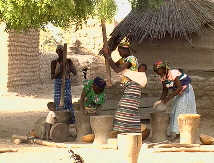
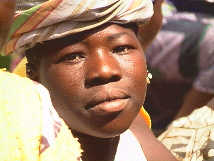
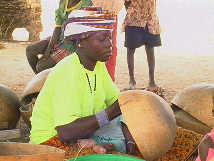
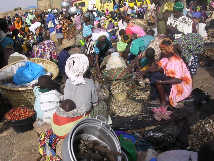
- These projects aim to resolve the daily problems faced in the villages in general, and the women in particular. We encounter problems such as malnutrition , illiteracy amongst the women (only 20 women in 200 can read and write).
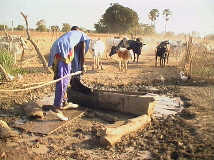
- As the small diameter wells can not provide enough water to the villages, we plan digging large diameter wells for the vegetable gardens, and to provide potable water for the villagers.
- Due to the harsh climatic realities, a campaign of fruit tree planting will be undertaken each year to fight against desertification, while providing fruit to the villages at the same time.
- Improving animal husbandry in the area by providing training to the villagers on how to take care of their herds during the dry season.
|
 |
 |
 |
|
THE IMPACT OF THE VEGETABLE GARDEN PROJECTS
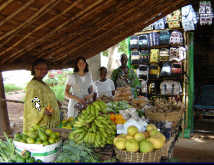
 We have two vegetable garden projects in two different villages up to now. We have two vegetable garden projects in two different villages up to now.
- Each project reaches 100 women directly.
- Each project reaches 800 people indirectly , (the average family has 6 children).
- In the past , dry season meant no work; this is no longer the case.
- It has helped unify the villages.
- The women involved now have a financial revenue.
- The women , in this context , are responsible for providing what is to be included in the sauce for the meal . In the past this was a real burden, but with the gardens this is no longer the case.
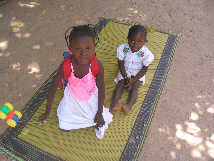
- Malnutrition was a problem in the past , but more and more the children are well nourished.
- The rapid deforestation has been slowed down as the women are now working all day long in the gardens and don't have enough time to look for wood.
- The level of self-confidence has grown among the women too.
|
|
 |
|
|
|