Madagascar - Welcome! Bienvenue! Tongasoa!
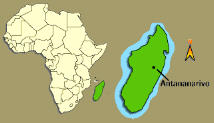 Location: Location:
Between the Mozambique channel and the Indian Ocean see. Area: Sea boundary: 5000 km. Surrounding Islands: Comoros Islands, Seychelles Islands, Mauritius, La Reunion
Climate:
Tropical; temperate, modified by altitude; summer rain (October to April): hot and humid; winter time (May- August): dry and cold. Terrain: high and mountainous inland, low and flat coastal land.
Natural resources:
Water, rain forests, sapphire, mica, cobalt, precious and semi-precious stones
Natural hazards: tropical storms (November to April)
Environment:
Current issues: bush fires, air pollution; deforestation; soil erosion; desertification;
Population: 18 000 000Age structure: 0-14 years: 44,8%;15-64 years: 52,2%; 65 years and over: 3%. Population growth rate: 2,9%. Life expectancy at birth: 55 (female) , 52 (male).Total fertility rate: 6 children born per woman. Ethnic groups: 18 mega tribes.
Religions: Christian, Muslim and Hindu , indigenous beliefs. Languages: Malagasy, French and local dialects.
Literacy: Female 62% Male 75%
Government
- Country name (conventional long form): Republic of Madagascar. Conventional short form: Madagascar.
Data code: MDG
- Government type:
Republic, democratic.
- Country Capital:
Antananarivo.
- Independence: June 1960 (from France).
- National holidays: Independence Day, 26 June (1960)
- Constitution: Secular legal system: inspired from French common law and customary law. Suffrage: 18 years of age;
- Executive branch: Chief of State: President Marc RAVALOMANANA (since 06 May 2002)
- Flag description: white vertical band, red and green horizontal bands, all the same size
Economy
- Overview: The government is encourages foreign investors by upgrading the communication systems and the road infrastructure. There is also a big effort to boost the productivity of local farmers. But the devaluation of the Malagasy currency, Ariary, caused inflation to soar and the rise of fuel price in the international market really prevented the economy from picking up as expected. Instead the cost of water and electricity went up 150% because of the diesel price and the poor condition of the infrastructure. Therefore, the Malagasy economy still has a long way to go before its recovery. The support of the international community and world bank helps decrease the budget deficit of the government the national debts.
- GDP per capita: $230USD. Composition by sector: Agriculture: 35%. Industry: 13%. Services: 52%.
- Population below poverty line: 70%.
- Inflation rate (consumer prices): 5%.
- Labour force by occupation: Agriculture 85%. Mining, manufacturing, and construction, transport and services industries: construction, foodstuffs, beverages, textiles, fertilizer.
- Agricultural products: rice, sugarcane, cattle, goats, pigs, poultry, beef, pork, poultry meat, milk, eggs, coffee
- Imports: machinery, transportation equipment, foodstuffs, fuels, petroleum products, fertilizer, rice, electronics
- Exports: world's number one exporter in natural vanilla; coffee, timber, textiles, art crafts, sea products
- Currency: Ariary. Exchange rates: 1 US $ to 2150 - 2200Ar (May 2006),
Transportation: Roads: total: 32000 km. Paved: 6300 km. Unpaved: 25700 km
Transnational Issues: Illicit drugs (heroin, herbs); money-laundering;
|
