The first 2 weeks: 24th June - 11th July, Nakirubi
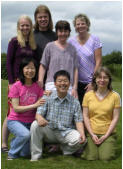 A team of seven of us set out for Uganda and stayed at first in Nakirubi in an African home. During our stay we observed the running of (KHIP) the Kangulmira Integrated Health Project, which has a clinic about ½ hours walk from where we were staying. We gained experience in the various departments in the clinic, including time spent with the clinical officer observing diagnosis and treatment of patients, also time in the treatment room and pharmacy. We had an extra team member,
 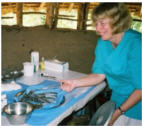 Fiona a dentist, from UK for the first 2 weeks of outreach and we were able to observe her in her dental treatments and act as her assistant. We attended a number of mobile immunization clinics where the students were able to improve their injection techniques and be involved in the weighing of babies and monitoring their growth. We also attended a number of ante-natal clinics and examined pregnant mothers.
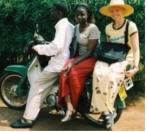
A very interesting project that is being developed at KHIP is 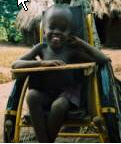 'Spring of Hope' This is a group of people who are working with disabled children; the children are visited at home each week and given physiotherapy and suitable aids to assist them. Once a month there is a clinic where they gather for further assessment, treatment as necessary and any new patients are seen and assessed. We were able to attend this monthly clinic and also had the privilege of travelling by motorbike to many of the homes in the outlying villages to observe the work and we distributed knitted teddy bears that had been donated to us.
  Most of these children had no toys or anything else to stimulate them.
We went to three different women's groups on two occasions, again in outlying villages and travelled by motorbike, where we taught on subjects such as HIV/AIDS, nutrition, diarrhoea and re-hydration. Each Sunday we attended local churches where we were able to take part in the service with testimony, songs and preaching.
11th July – 15th August, 5 weeks on Namiti Island
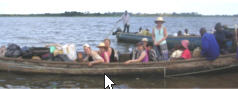
The team travelled to the Bavuma Islands by mini-bus and boat, we stayed on the island of Namiti for 5 weeks. Namiti has a population of about 1000 people and is mostly a fishing community that has a very basic standard of living. There is no electricity and the only water supply is the lake. There is a small clinic that is run by a clinical officer and his wife who is a midwife and 2 primary health care workers. We felt strongly before coming that we were to focus particularly on this island and build on relationships that we had made last year; we also felt that we needed to build strong relationships with the church, so this is what we did. We ministered in Namiti church each Sunday, taking part in the service and a different member of the team preached each week. We also were involved in house to house visits to encourage and pray for the members of the church and their families. There was spiritual opposition to what we wanted to do, especially in our desire to spend more time on Namiti. We prayed into this situation and did a number of prayer walks on the island and we saw God answering many of our prayers.
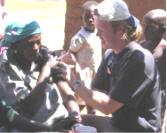 Initially we were involved in the monthly immunization programme on Namiti and several of the neighbouring islands. We always started the session with teaching about the diseases that we were immunizing against, in the form of dramas. We enjoyed doing this and as a result there was a much bigger turn out than normal, so much so that we ran out of some of the vaccines. The students were able to gain more experience in giving injections and become competent at weighing babies and monitoring their growth.
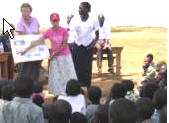 After this we were mainly involved in heath education and mobile clinics on Namiti and 6 other islands. We prepared a variety of health talks on subjects such as Nutrition, Diarrhoea and Re-hydration, HIV/AIDS, and Bilharzia. We spoke in many of the primary schools on the islands and then spoke to the adults in the community. We usually followed this by a mobile clinic to treat minor illnesses, which sometimes turned out to be a bit more serious than expected! We made a small charge for treatments but treated wounds for free.
Last year a lady came to us in labour and we discovered that she needed an emergency caesarean section as the baby was in the wrong position. We prayed much for this situation and in the middle of the night we arranged and paid for her to be transferred to the mainland by boat and mini-bus. After 7 hours of being in the second stage of labour the baby was finally delivered alive! and the hospital staff admitted that it was miraculous that both this mother and child survived. 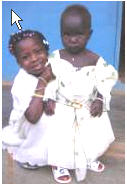 The parents of the child who were Muslims saw that God's hand had been on this situation and they gave the child a 'Christian name' Mercy, acknowledging that it had been God's mercy that had spared this child and her mother. This year when we arrived on the island the Muslim couple were overjoyed to see us and we were so happy to see that Mercy and her parents were all doing well. We arranged a birthday party for her and invited the family to the YWAM base where we gave thanks to God and were given permission to pray for the whole family. Two weeks later Mercy and her 8 year old cousin were sent to church dressed in their best clothes and we were able to pray for them again. We believe that God has a special purpose for this child.
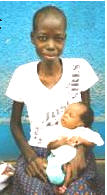 When we arrived on Namiti island there was a lady, living at the clinic with a two week old baby named Grace. The lady was very ill with pneumonia, severe anaemia and we also discovered she had AIDS. Over the next couple of weeks she and the baby were not doing well, her milk supply was poor and the Grace was loosing weight. We were able to treat her pneumonia, anaemia and improve her diet. We spent much time with her, prayed for her and encouraged her to breast feed every two hours. We began to see her change and have some hope; she had a big smile for us every time that she saw us; her milk supply increased and Grace gained ½ kg in 2 weeks. We do not know what the long term future is for them but know that God has touched their lives with his love and are happy to know that the lady is a believer.
We were also able to spend time ministering to the Namiti health care team that worked at the YWAM base. We arranged several team meetings for us all and had excellent times of praise and worship. God gave us specific words for each of them and we gave a short message to the whole team on two occasions. At the second meeting God led us to do a foot washing session, which was quite a moving time for all concerned and seemed to impact many in a deep way.
15th August -21st August, Hopeland/Entebbe
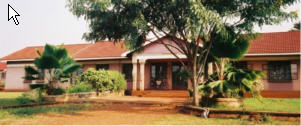 We came to stay at the Hopeland YWAM base on the mainland every 10 days on our days off from the islands where we could live in relative luxury, which included electricity when it was working, running water and cold showers. It was good to be able to relax and have access to the internet in the town of Jinja and to be able to find a hotel with a swimming pool. We also spent our final 5 days at the base where the students could sit their final exam and have some de-brief time as well as some relaxation before we headed off to Entebbe and our flight home. All of us on the team were sad to leave Uganda as we had made good friends and we did not want to say goodbye to them!
During the outreach we had continual evaluation and it was evident that the students had been able to put into practice much of what they had been taught during the lecture phase of the school. We were able to build good relationships in a community as we empowered them with health education and health care. The outreach exceeded our expectations and we met the University of the Nations requirements for a primary health care outreach
Lyn Child (IPHC outreach leader)