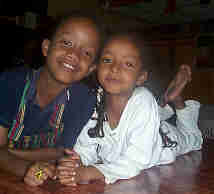
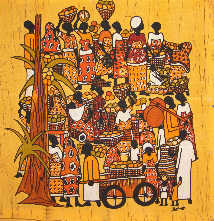
Up until recently the name 'Eritrea' was a synonym for 'war' and an antonym for 'relaxing with a gin by the seaside', but remarkably the definitions are starting to be reversed. It now has a peace agreement with Ethiopia under its belt and a chance to show off its vibrant and friendly inhabitants.
More of Eritrea's fascinating archaeological ruins are being unearthed around the country (as opposed to more being bombed out of existence) and the waters of the Red Sea are beckoning divers with flourishing stocks of marine life. Flak jackets are out - wet suits are in.
Eritrea is battle-scarred from 30 years of fighting for independence and, more recently, from a border dispute with Ethiopia. But its people are pursuing peacetime as vigorously as they pursued conflict, with swathes of the major cities and towns being rebuilt and large amounts of Asmara gin being downed to fuel the favoured pastime of dancing. Warning
Landmines are a major problem, particularly the areas west, south and southeast of Barentu. Avoid walking alone, in riverbeds and in areas officially deemed unsafe. An extremist Islamic group operates in the west. Avoid travel along the Agordat-Hawashayt road and north of Afabet.
Famine is again of major concern in Eritrea in 2005, with a heavy reliance on international food aid. The World Food Programme believes that up to half of Eritrea's four million people are chronically malnourished.
The border with Ethiopia is permanently closed, and passage between the countries is not possible. The area is patrolled by UN peacekeepers and seems stable, but it's a fragile peace. The border with Sudan is often closed, and the passage between the countries is insecure. More...